
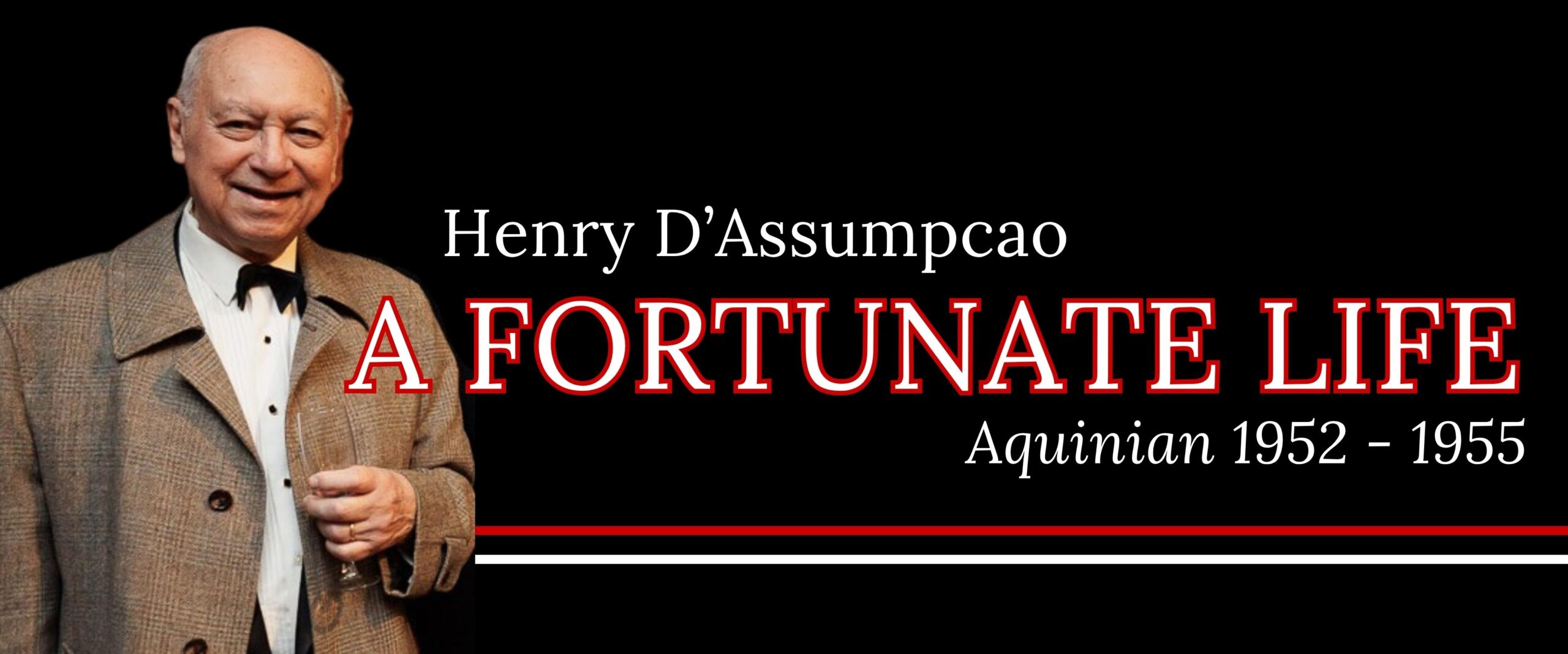
Emeritus Professor Henry d’Assumpcao AO (Aquinian 1952-1956)
Chatting with current Aquinas students at Wolves Tales lunches, I couldn’t help contrasting their life experiences with my own at the same age.
I was born of Portuguese parents in the then Portuguese colony of Macau in China during the Great Depression. My father sought employment in nearby Hong Kong and we lived there until 1941 when World War II erupted in the Pacific and the Japanese invaded. I was only seven years old, but have some memories of the war: of the shriek of falling bombs; of our family moving, together with 400 others, into the home of the Portuguese Consul of Hong Kong — hoping for sanctuary because Portugal was neutral in that war — all crammed together and sleeping on the floor; of Japanese soldiers bringing their torn uniforms to our apartment for my mother to repair; and of our evacuation as refugees to Macau.
Macau was a tiny enclave, smaller than the City of Unley. The Portuguese who took refuge there survived with rations from the Portuguese government but any difficulties we faced were nothing compared the misery of the four hundred thousand desperate Chinese who also fled there, many dying of starvation and disease in the streets.
The end of World War II in 1945 brought not peace but civil war in China that prompted my parents to send my older brother Carlos, and later me, to be educated and board at Sacred Heart College in Adelaide. So, in 1949, at the age of fourteen, I travelled to Australia, alone, on a small freighter.
Australia had few overseas students back then. My entry had been facilitated by a South Australian politician, the Hon. Ken Bardolph MLC; he had a son at the school and was kind enough to make a submission to the Federal Minister for Immigration on my behalf. Last year, when visiting Aquinas for the 75th Anniversary celebrations, I was delighted to learn of a coincidence: that Stephanie Hamra, your Manager of Admissions, was Ken Bardolph’s granddaughter.
Australia’s multicultural society today is accustomed to unspellable and unpronounceable surnames, but in 1949 “d’Assumpcao” was something of a novelty. I was welcomed into the school and found friends like Bernie Wadsworth and Tom Mestrov; in 1952 the three of us moved on to study at the University of Adelaide and live at Aquinas College.
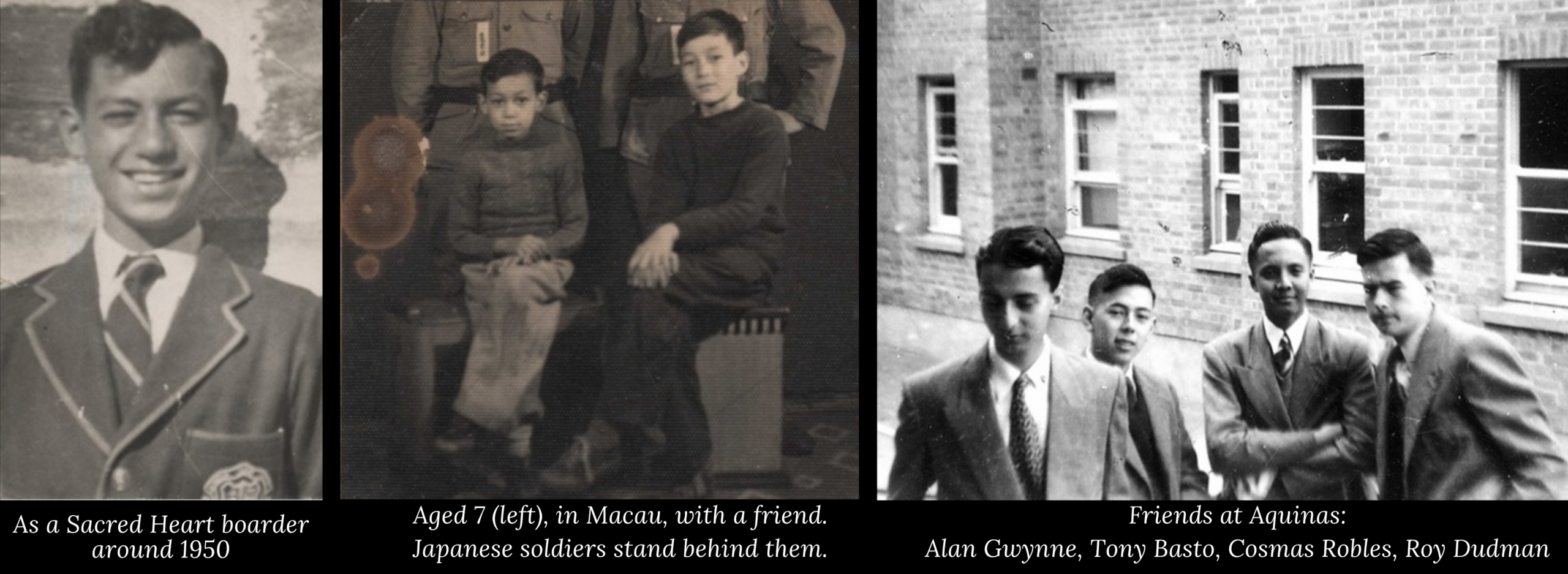
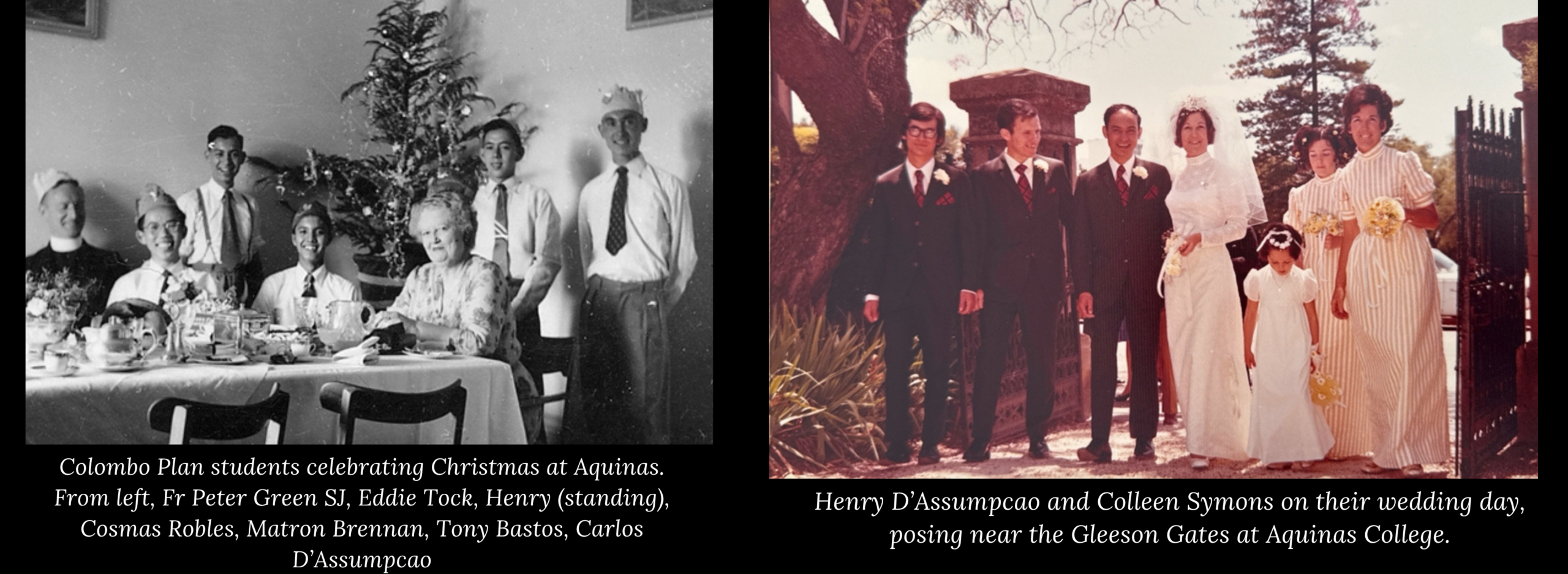
That was a time when having a tertiary education was a privilege enjoyed only by a minority. Aquinas had only recently been established as a breeding ground for Catholic leaders of the future. We worked hard but still had a lot of fun, indulged in undergraduate pranks and forged lasting friendships. The College was a melting pot of cultures: there were students from regional SA, medical students from WA (there was no medical school in WA then) and a large group from Asia (the Colombo Plan opened the doors to Asian students in 1951). Although that was the era of the White Australia Policy, skin colour was invisible at Aquinas.
I got a degree in engineering and sought a job in what later was named the Defence Science and Technology Organisation but as an alien could not get the essential security clearance. They were looking for new recruits, so they paid me to work at the university for a few months until they could push my naturalisation papers through. They then sent me to the UK for a year to gain research experience; I remained with DSTO for 34 years, working on a range of topics: radar, sonar, signal processing and underwater acoustics.
I married Colleen Symons (whose brother Peter was another Aquinian) in the College chapel and we were blessed with four beautiful children. She lived to enjoy our 17 grandchildren until cancer took her away from me.
In time I was appointed the Chief Defence Scientist in charge of DSTO nationally. On my retirement from Government service in Canberra, we returned to Adelaide where I took a position at the University of SA as Director of a national research centre involving five universities and, after retiring again, acted part-time as Chief Scientific Adviser to the Australian Customs Service. I finally went to pasture in 2005.
I am an old man now, long past my use-by date, grateful that the Good Lord has granted me an extension of time to prepare for my final exams, surrounded by the love of my family and friends, all enjoying the bounty and security of this lucky country, and thankful to Aquinas for having helped shape my formation.
Borrowing the title from A.B. Facey, mine has been A Fortunate Life.